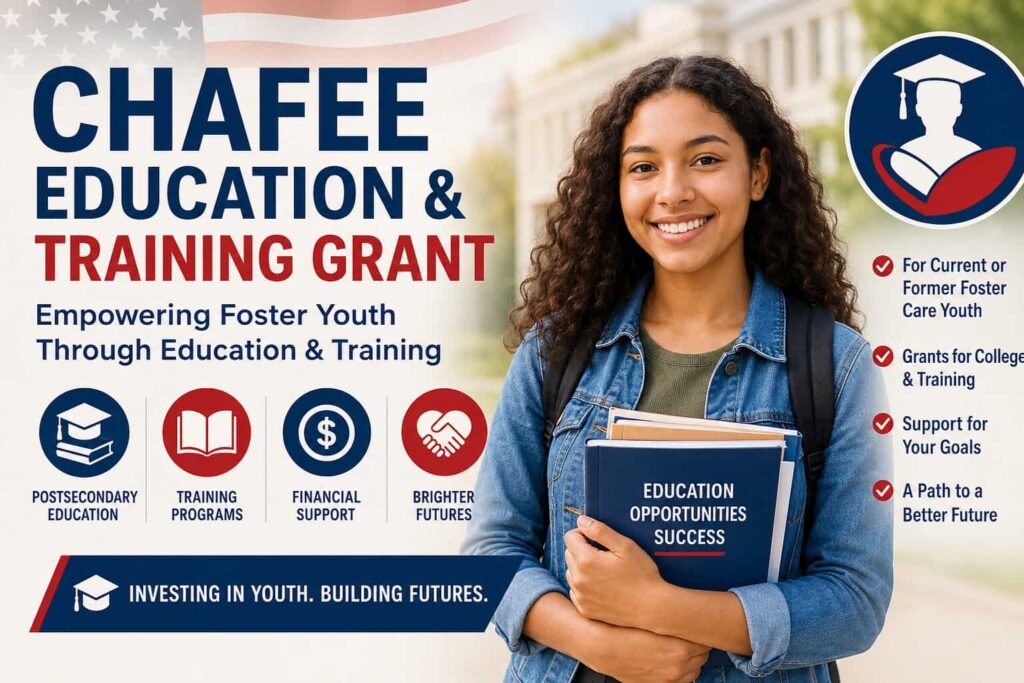

The Oregon Chafee Education and Training Grant (ETG) is a state-funded program designed to aid present and former foster youth access higher education.
Administered by the Oregon Department of Human Offerings, this grant assists students enrolled in eligible postsecondary programs, such as community colleges, universities, and vocational schools.
If you spent time in foster care in Oregon after age 14, you may qualify for this crucial financial aid.
Understanding the grant’s conditions and submission procedure can create the difference between struggling with costs and successfully earning a degree.
Quick takeaways
- Unseal to existing and former foster youth in Oregon who were in foster care after age 14.
- Funds can be applied for tuition, fees, room and board, books, and other education-related expenses.
- You must finish the FAFSA and send in a Chafee ETG submission to the Oregon Department of Human Services.
- Students must maintain satisfactory academic progress to carry on receiving funds.
- The grant is renewable annually, up to age 21 (or 23 if enrolled) or until degree completion.
The Oregon Chafee Education and Training Grant supports delete financial barriers for foster youth seeking a college education, covering charges that might otherwise prevent enrollment and persistence.
What Is the Oregon Chafee Education and Training Grant?
The Chafee Education and Training Grant is a federal plan administered at the state level through the John H.
Chafee Foster Care Scheme for Winning Transition to Adulthood.
Oregon’s version gives financial assistance to eligible foster youth pursuing postsecondary education.
The grant aims to reduce the financial challenges that often hinder foster youth from attending and finishing college.
Funding comes from the federal Chafee plan, and states like Oregon can fix precise eligibility criteria within federal guidelines.
The grant isn’t a loan—it doesn’t demand to be repaid—and can be employed at eligible institutions in Oregon or possibly out of state, depending on scheme rules.
Who Is Eligible for the Oregon Chafee ETG?
Eligibility is tied to your expertise in the foster care system.
You must have been in foster care in Oregon for at least six months after your 14th birthday.
This covers youth who were adopted or placed with a guardian after age 14. You must be a resident of Oregon and a U.S. Citizen or eligible noncitizen.
Also, you must be enrolled or accepted for enrollment at an eligible postsecondary institution, covering community colleges, four-year universities, and vocational schools.
You require to maintain satisfactory academic progress as defined by your school.
Age limits put in: you can obtain the grant up to age 21, or up to age 23 if you’re enrolled in a postsecondary plan.
What Benefits Does the Grant Provide?
The Oregon Chafee ETG can include many educational expenses.
Eligible expenses involve tuition and fees, room and board, books and supplies, transportation, and other personal expenses related to attending school.
The grant quantity is located on your financial need as determined by the FAFSA and open state funding.
Whereas the maximum federal Chafee grant is normally up to $5,000 per year, Oregon’s actual award may vary depending on the total of candidates and their want.
Students may also combine the ETG with other financial aid, such as Pell Grants and scholarships, as extended as overall sum aid doesn’t exceed the expense of attendance.
How to Apply for the Oregon Chafee Education and Training Grant
The submission workflow needs several moves.
First, finalize the Complimentary Submission for Federal Student Aid (FAFSA) online at studentaid.gov.
Employ the school year for which you’re seeking aid.
You must cover your Social Security number and financial info.
Next, hand in the Oregon Chafee ETG application to the Oregon Department of Human Solutions (DHS).
This submission is on offer on the DHS website or through your caseworker.
You’ll demand to offer documentation of your foster care history and your enrollment or acceptance at an eligible school.
- Wrap up the FAFSA and send in it before the priority cutoff (usually by May 1).
- Download and stock out the Oregon Chafee ETG submission form from the DHS website.
- Attach proof of foster care (court documents, DHS letter, or case plan).
- Supply a copy of your acceptance letter or current enrollment verification.
- Hand in the finish submission packet by the due date to the DHS address listed on the form.
Required Documents for the Application
Gathering the right documents before you begin can speed up the submission routine.
You’ll require authorized proof that you were in foster care in Oregon after age 14. This could be a court order, a letter from DHS, or your case strategy.
You also want to reveal your enrollment status: acceptance letter if you haven’t began, or a present registration verification if you’re previously enrolled.
Your FAFSA submission confirmation is also required, as it calculates your Expected Family Contribution (EFC).
If you’re registering as an independent student, you may need to give tax returns or proof of income.
Recall that all documents must be existing and legible.
Tips for a Successful Application
Start early.
The submission cycle for the Oregon Chafee ETG commonly opens in the spring for the following academic year.
Sending in your FAFSA well before the deadline gives you time to right any errors.
Reach out to your DHS caseworker or the Chafee coordinator for Oregon to inquire questions and confirm deadlines.
Maintain copies of everything you submit.
If you don’t get a confirmation within a few weeks, track up with DHS.
Keep up continuous contact with your financial aid office and academic advisor to ensure you encounter renewal needs.
Award amounts can alter each year set on state funding, so reapply annually.
- Register for other scholarships and grants to supplement the Chafee ETG, as the grant may not span all costs.
- Inspect with your school’s financial aid office to see if they provide additional back for foster youth.
- If you’re accepted to multiple schools, confirm that each institution is eligible for the grant.
Common Mistakes to Avoid
Missing the deadline is the most widespread mistake.
The Oregon Chafee ETG has a particular cutoff each year, and delayed submissions are generally not accepted.
Another pitfall is failing to send in all required documents.
Incomplete packets can be returned or delayed, causing you to miss out on funding.
Also, don’t assume you’re ineligible if you were adopted or placed in guardianship.
Many youth who exited foster care through adoption or guardianship still meet the eligibility criteria as long as they were in care after age 14. Always verify with a DHS representative if your situation is odd.
Renewing the Grant Year After Year
The Oregon Chafee ETG is renewable, but you must reapply each academic year.
You demand to keep on meeting eligibility conditions, such as keeping up satisfactory academic progress.
Generally, that means a minimum GPA (often 2.0) and finishing a minimum figure of credit hours.
Your financial require is reevaluated each year located on your FAFSA.
If your family situation modifies, your award may adjust.
Be arranged to submit updated documents promptly.
Many students rely on the grant for multiple years, successfully earning degrees and certifications.
Quick Facts: Oregon Chafee Education and Training Grant
| Item | Details |
|---|---|
| Administered by | Oregon Department of Human Services |
| Eligibility | Current or former foster youth in Oregon, in care after age 14 for at least 6 months |
| Age Limit | Up to 21 (or 23 if enrolled in postsecondary program) |
| Award Amount | Varies; up to covered cost of attendance based on need |
| Application Deadline | Check with DHS for current cycle; typically in spring for fall enrollment |
| Required Forms | FAFSA, Oregon Chafee ETG application, proof of foster care, enrollment verification |
Frequently Asked Questions
Can I employ the Oregon Chafee ETG to take part in a school outside Oregon?
It depends on the state’s policy.
Some states allow use of Chafee funds at out-of-state institutions if the program is approved.
Contact the Oregon DHS Chafee coordinator to confirm whether your chosen school qualifies before registering.
What happens if I let fall below satisfactory academic progress?
If you fail to meet your school’s satisfactory academic progress conditions, you may forfeit eligibility for the grant.
You can frequently appeal the decision by sending in a plan for improvement.
Contact your financial aid office and DHS immediately to go over possibilities.
Do I want to have a certain GPA to get the grant?
Whereas the Oregon Chafee ETG doesn’t specify a minimum GPA, you must maintain satisfactory academic progress as defined by your college or university.
Most schools require at least a 2.0 GPA and a certain figure of wrapped up credits each term.
Is there a cap on how many years I can obtain the grant?
The grant is open until you turn 21 (or 23 if enrolled) or until you finalize your degree, whichever comes first.
There’s no particular count of years restrict within that timeframe, as long as you continue to encounter eligibility and uphold satisfactory progress.
Can I receive the Chafee ETG if i’m also getting a Pell Grant?
Yes, you can receive both.
The Chafee ETG is designed to supplement other financial aid, such as Pell Grants, state aid, and scholarships.
Though, your total aid package can’t exceed your school’s cost of attendance.
What if I was adopted from foster care after age 14? Am I still eligible?
Yes, if you were in foster care for at least six months after your 14th birthday and were adopted or placed in guardianship, you may still qualify.
The key aspect is your time in care, not your existing living situation.
Provide documentation of your foster care history.
Final Thoughts
The Oregon Chafee Education and Training Grant is a vital reference for foster youth pursuing higher education.
By covering crucial prices and operating alongside other aid, it can significantly cut the financial burden of college.
Understanding the eligibility needs and submission procedure is the first step toward securing this assist.
Call on the Oregon Department of Human Offerings website to access the formal application and confirm present deadlines.
Launch gathering your documents today and reach out to a DHS caseworker with any questions—your education is value the work.